Personal Injury and Workers’ Compensation Resources
Explore FAQs, legal guides, and client tools from Anderson Franco Law.





If you were injured in an accident in California, you probably have questions about medical bills, missed work, insurance, and whether you need a lawyer at all. This page answers common questions we hear from injured people and their families.
At Anderson Franco Law, we represent people in the San Francisco Bay Area and across California in personal injury and serious work-injury matters. Our practice is built around direct attorney involvement, careful case preparation, and clear communication from start to finish. Anderson Franco was born in San Francisco, attended UC Berkeley for college and law school, and regularly works with both English-speaking and Spanish-speaking clients
Anderson Franco Law helps injured people pursue compensation after accidents and other injury-causing events. That includes investigating what happened, identifying who may be legally responsible, gathering evidence, dealing with insurance companies, documenting damages, negotiating settlement, and filing suit when necessary.
Our firm handles serious personal injury matters involving car accidents, truck accidents, pedestrian injuries, bicycle accidents, workplace incidents, construction injuries, and other negligence-based claims. We also evaluate whether a work injury may involve both a workers’ compensation claim and a separate third-party injury case.
Anderson Franco Law is a boutique injury firm. Cases are accepted selectively so they can receive meaningful attorney attention rather than being pushed through a high-volume system. The goal is not to move files quickly. The goal is to build strong cases carefully and give clients direct access to the lawyer handling the matter.
Clients also hire Anderson Franco Law because of the firm’s background and focus. Anderson Franco previously represented insurance companies before transitioning to representing injured people, which gives him insight into how insurers evaluate claims, challenge damages, and defend cases. He is also fluent in English and Spanish, which matters for many Bay Area families who want clear communication during a stressful time.
Yes. The firm offers free consultations for injury matters. That gives you a chance to explain what happened, ask questions, and learn whether you may have a claim without paying upfront for that initial conversation.
Yes. Anderson Franco is fluent in English and Spanish, and the firm regularly works with Spanish-speaking clients and families. Clear communication matters in injury cases, especially when clients are dealing with treatment, insurance calls, wage loss, and legal deadlines.
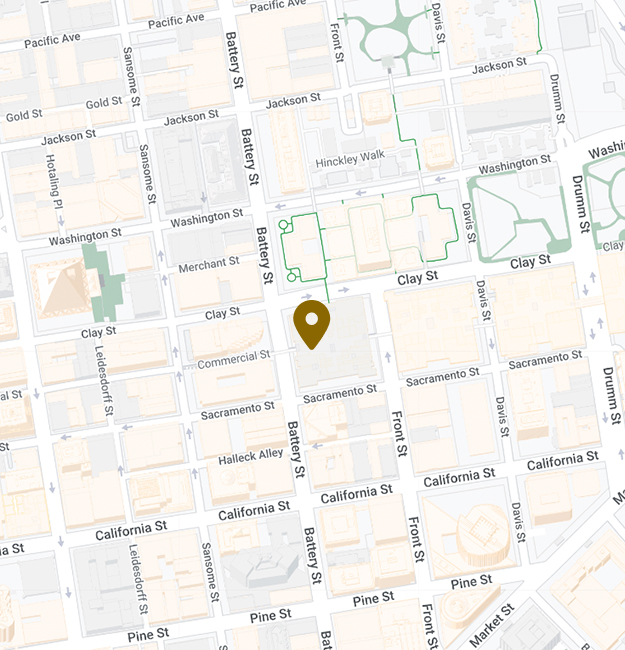
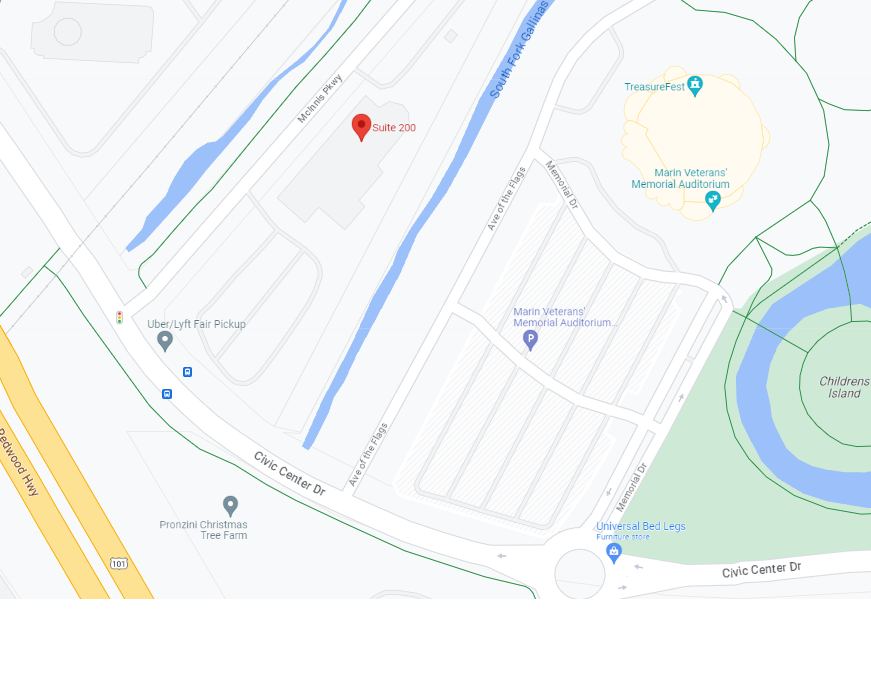
Anderson Franco Law represents injured people throughout the San Francisco Bay Area and surrounding parts of California. The site specifically references San Francisco, Marin County, Alameda County, Contra Costa County, San Mateo County, Santa Clara County, Solano County, and Sonoma County, with a local presence in San Francisco and San Rafael.
Hiring a personal injury lawyer usually does not require upfront payment. Anderson Franco Law handles personal injury matters on a contingency fee basis, which generally means the attorney fee is tied to a recovery rather than hourly billing.
That structure matters because most injured people are already dealing with enough financial pressure. A contingency arrangement lets people pursue a case without paying out of pocket at the start.
Workers’ compensation fees work differently. In California, workers’ compensation attorney fees are generally subject to approval through the workers’ compensation system rather than handled exactly like a civil personal injury contingency fee. The important point is that the fee structure should be explained clearly at the beginning of the representation.
A personal injury case is worth whatever the facts, damages, insurance, and legal proof support. A real valuation depends on liability, the nature of the injuries, medical treatment, future care, lost income, pain and suffering, and how the injury affected your daily life.
There is no honest way to value a case based on one sentence, one photograph, or one emergency room visit alone. Some cases have strong damages but limited insurance. Others have modest bills but serious long-term disruption. A proper evaluation requires looking at the entire picture.
Yes. A case can still have value even if the vehicle damage appears modest. Insurance companies often try to use low property damage to argue that a person could not have been seriously hurt, but that is not always medically or legally accurate. What matters is the actual injury evidence, treatment, symptoms, and life impact.
Yes. Anderson Franco Law focuses on serious injury matters involving meaningful physical, financial, and personal harm. The site states that the firm has recovered millions for clients and highlights results including a $1,000,000 truck accident recovery, a $1,150,000 premises liability recovery, and other substantial six-figure results.
Public examples on the firm’s site include a $1,000,000 truck accident recovery involving injuries that required spine surgery, a $1,150,000 premises liability recovery where the store denied liability, a $350,000 rear-end truck collision case, a $250,000 sidewalk fall case, and other six-figure recoveries in vehicle and premises matters. Past results do not guarantee future outcomes, but they help show the firm’s experience with substantial injury claims.
After an accident, get appropriate medical care, report the incident where appropriate, preserve evidence, and be careful about what you say to insurance companies. Photos, witness information, incident reports, and early treatment records can all matter later.
You should also avoid assuming the insurer will guide you fairly. Insurance companies are evaluating exposure and cost. They are not trying to maximize your recovery.
A personal injury case usually begins with an investigation. That often includes reviewing how the incident happened, identifying potentially responsible parties, preserving evidence, and understanding the medical picture. The claim may then move into treatment, records collection, demand, negotiation, and possibly litigation if a fair resolution is not offered.
If a lawsuit is filed, the case may involve written discovery, document exchange, depositions, expert review, mediation, and trial preparation. Some cases resolve early. Others require sustained litigation pressure.
A personal injury case takes as long as the facts and injuries require. Some claims resolve in months. Others take much longer, especially if fault is disputed, treatment is ongoing, future care is unclear, or litigation becomes necessary.
In general, it is usually a mistake to rush a serious injury case before the medical picture is reasonably clear.
Generally, no. You have no duty to speak with the at-fault driver’s insurer, and early recorded statements or broad medical releases are often used to minimize your claim. Instead, refer all calls to us. If you must acknowledge a call, share only your name, contact information, the date and location, and the claim number—don’t discuss injuries, treatment, or fault, and politely decline any recording. Run property damage through your own insurer when possible; they can recover from the other carrier later. Do not sign the other insurer’s medical or employment authorizations. Your own policy may require cooperation for med-pay or UM/UIM—talk to us first so we can attend any statement or provide a written one. If you already spoke, tell us so we can obtain the recording and address any issues.
Yes. A delay in going to the hospital does not bar a claim in California, but insurers will use it to argue your injuries weren’t caused by the incident. Many conditions have delayed symptoms (concussion, soft-tissue injuries, internal injuries), so get a medical evaluation as soon as possible and tell the provider it stems from the crash or incident. Document when symptoms started, how they’ve changed, and any activities you couldn’t do; avoid gaps in treatment once you begin. Save photos, bills, and work-loss proof, and don’t give a recorded statement or sign broad medical releases to the other insurer. Deadlines still apply: most injury claims are two years, and government claims can be as short as six months. We can help explain the delay, link the medical evidence, and protect your claim.
It’s safest not to post at all. Anything you share—photos, captions, tags, check-ins, even “private” stories—can be found, subpoenaed, or screenshotted and used to challenge fault or your injuries. Pause your accounts or tighten privacy, don’t accept new followers, and ask friends and family not to post about you or tag you. Do not delete existing posts once a claim is reasonably anticipated; that can be treated as spoliation. Instead, stop posting, make content private, and send us copies of anything already online so we can preserve and address it. Use direct communication with us—not DMs or comments—for updates about your case.
Start by getting a prompt medical evaluation and tell the provider exactly how the injury happened and every body part that hurts; consistent follow-up (without gaps) creates a clear medical record. Photograph visible injuries right away and then every few days under good lighting—include a date and, when useful, a ruler or common object for scale—and capture devices like braces, casts, or crutches over time. Keep a daily symptom log with a 0–10 pain score, sleep quality, medications taken, missed activities or work, and what makes symptoms better or worse. Save everything: visit notes, imaging reports and CDs, referrals, work restrictions, bills, receipts for meds and medical supplies, and mileage or rides to treatment; also keep pay stubs and employer letters showing time off or reduced duties. Preserve pre-injury photos or activity data to show the before-and-after contrast, and ask close family or coworkers to write short observations if they’ve seen changes. Share all updates with your attorney, and avoid posting about your injuries on social media.
If an insurer denies your claim, we ask for the denial in writing and the specific policy and factual reasons. We then audit the file—police/incident reports, photos, medical records, witnesses, coverage—to fix gaps and submit a targeted rebuttal with the missing proof. If the carrier still refuses, we escalate: file suit against the at-fault party or, for UM/UIM, demand arbitration within the policy’s deadlines. Through discovery, depositions, and motions, we force the defense to commit to its story and produce documents; we also mediate when it can move the needle. If the denial is unreasonable, we may pursue bad-faith remedies (in California, that can include Brandt attorney’s fees and other damages). Meanwhile, we use available coverages—health insurance, med-pay, workers’ comp—to keep treatment on track and protect your credit while the dispute is resolved.
Medical bills are usually paid through one or more available sources while the case is pending. Depending on the case, that may include health insurance, Med Pay, workers’ compensation, or other arrangements. The at-fault party’s insurer usually does not simply pay bills as they come in while the claim is open.
Because billing and reimbursement issues can affect the net recovery, these issues should be addressed early.
You may still have options. In some cases, uninsured motorist or underinsured motorist coverage under your own policy may provide an additional source of recovery. The firm’s site specifically notes that injured people may still have paths forward even when the at-fault driver lacks coverage.
Making a claim does not automatically mean your rates should go up. In California, fault matters. The issue is often whether the accident is treated as principally at fault under California insurance rules.
That said, insurance pricing can be complicated, so the answer depends on the policy, the carrier, and how the accident is characterized.
You still have options. We first look to your own insurance: uninsured/underinsured motorist coverage can pay for injuries, and med-pay can cover copays and treatment regardless of fault; collision (or UMPD) can handle vehicle repairs. We also search for other responsible parties and policies—an owner’s permissive-use coverage, an employer if the driver was on the job, a roadway or property hazard, or a defective part—because those can provide insurance even when the driver has none. If no coverage exists, we can sue the at-fault driver personally and, if we win, pursue collection through wages or assets, but collectability often limits recovery. Hit-and-run claims have strict policy rules (prompt police report and insurer notice), and government-entity claims carry six-month deadlines. Bring us your policy and any claim numbers; we’ll map all coverage paths and preserve your rights.
Not knowing exactly who caused the injury does not necessarily mean you do not have a case. Many strong cases begin with uncertainty. Part of a lawyer’s job is to investigate who owned, controlled, maintained, operated, or contributed to the dangerous condition or event.
That can involve witness statements, incident reports, video, employment records, vehicle information, property records, or other evidence.
Possibly. A person may still have a viable California injury claim even if fault is disputed or shared. Partial responsibility can affect value, but it does not automatically eliminate a case. What matters is the evidence, the degree of fault, and the damages.
You may not legally need a lawyer in every case, but you should be cautious. Insurance companies often reach out quickly after an accident, sometimes before the injured person understands the full extent of the injury, the available coverage, or the long-term effect on work and daily life.
Even in cases that seem straightforward, early mistakes can affect value later.
If you were injured on the job, you may have rights under California workers’ compensation law. In many cases, the first step is to report the injury to the employer and complete the DWC-1 claim form. The workers’ compensation system may provide medical care and disability benefits for job-related injuries.
Sometimes. If someone other than your employer caused or contributed to the injury, you may also have a separate third-party personal injury claim. This issue commonly arises in construction cases, driving-for-work cases, property cases, and defective product cases.
That distinction matters because a third-party injury case may allow recovery for damages not available through workers’ compensation alone, including pain and suffering.
Because some of the most valuable work-injury cases are not “only workers’ comp.” Anderson Franco Law’s site emphasizes looking beyond the initial claim form and evaluating how the incident happened, who was involved, and whether a broader civil claim exists. That fuller analysis can materially change the value of the case.
Anderson Franco is a California personal injury lawyer and the founding attorney of Anderson Franco Law. He represents injured people in the Bay Area and surrounding parts of California in cases involving serious accidents, negligence, and injury claims.
The firm’s public profile states that Anderson Franco was born in San Francisco and attended UC Berkeley for both college and law school. Before building his current plaintiff-side practice, he represented insurance companies, which now informs how he evaluates claims and litigation risk.
Clients often choose Anderson Franco Law because they want direct attorney involvement, a boutique approach, bilingual communication, and a lawyer who understands how insurance companies evaluate claims. The firm’s public materials also emphasize meaningful results in serious injury matters and a focus on real client access rather than a high-volume model.
If you were injured in California and want to understand your options, Anderson Franco Law offers free consultations. Whether the case involves a car crash, truck collision, pedestrian injury, dangerous property, or a work-related injury with possible third-party liability, the first step is to evaluate the facts carefully and get clear guidance about what comes next.
Fill out the contact form or call us at (415) 727-1832 to schedule your free consultation.